By Hector Gil Jareno
@redlineproject
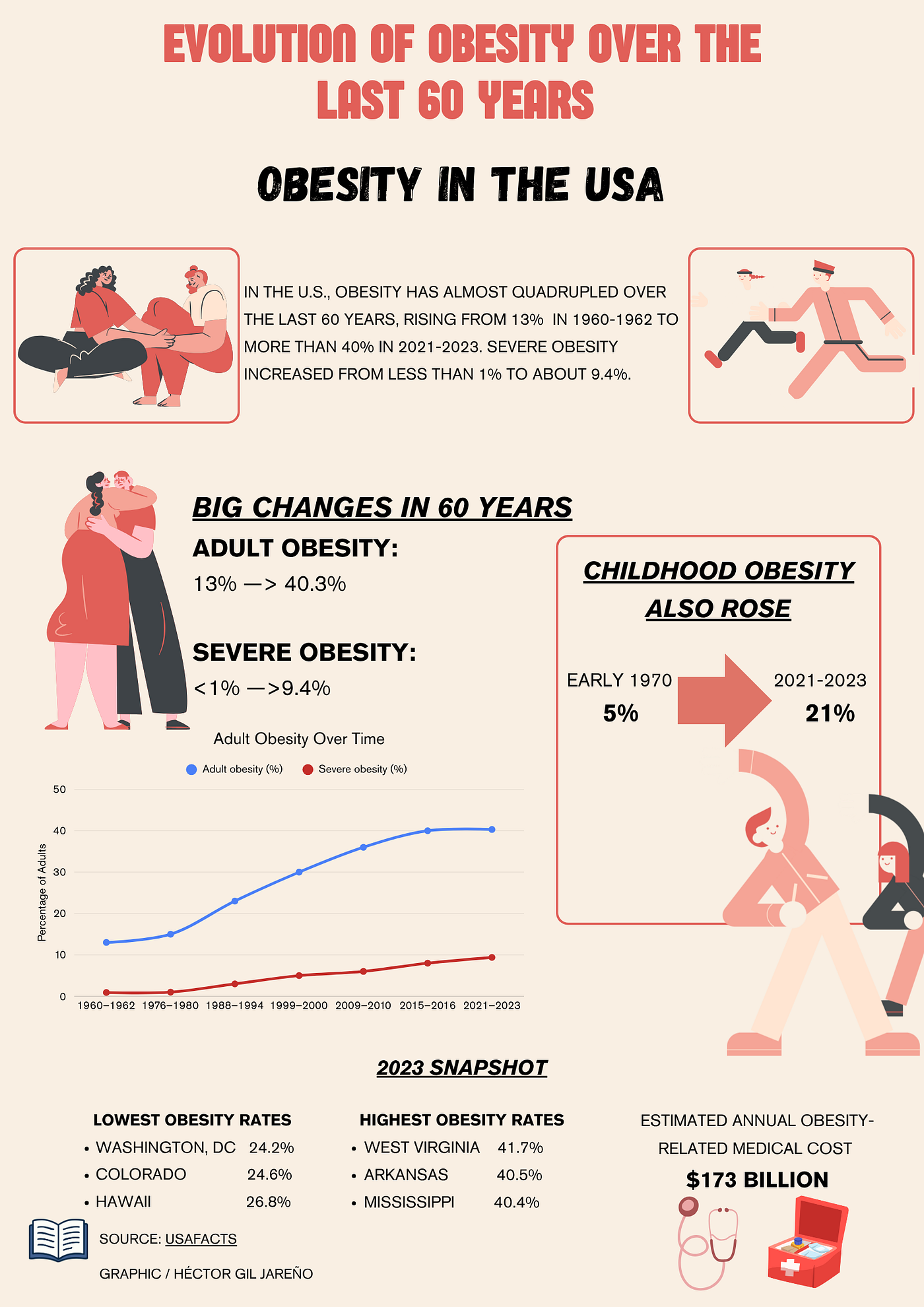
According to the website USAFacts, in the past 60 years, the obesity rate has risen substantially in the United States. Somewhere around the early 1960s, the obesity rate for American adults was 13%. By 2021–23, that figure increased to 40.3% — a 27 percentage point increase.
The prevalence of severe obesity has increased rapidly, too. Less than 1% of adults were severely obese in 1960–1962. It is approximately 9.4% today.
The same has been true for childhood obesity. Approximately 5% of children were overweight in the early 1970s. By 2021–2023, the rate had climbed to 21%. This is particularly concerning as childhood obesity has the potential to lead to chronic health conditions in the future.
But there are significant differences among the states shown on the 2023 snapshot, too. Some of the lowest rates of obesity were found in Washington, D.C., Colorado and Hawaii, and some of the highest rates were found in West Virginia, Arkansas and Mississippi.
There is also a huge economic burden associated with obesity. In the United States, it is estimated that obesity-related disease costs are $173 billion annually.