


By Mina Ahmed
@redlineproject
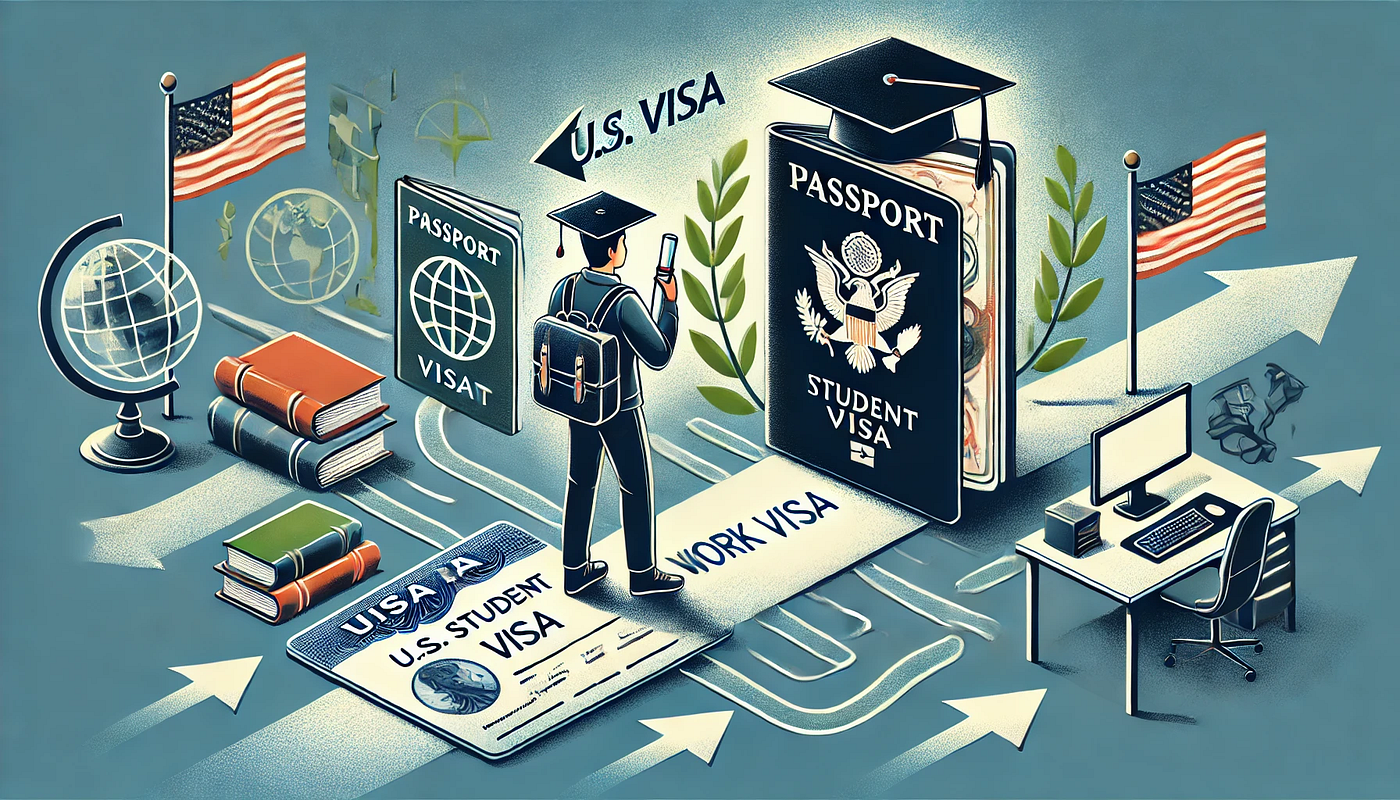
AI disclosure: For the purpose of this story, DALL-E was used for image generation, Quilbolt was used for paraphrasing and Notebook LM for the podcast.
Dr Shahab Zaidi landed in the United States in 1983 with one suitcase, $100, and a medical degree from Dow Medical College in Karachi, Pakistan.
Upon arrival in the United States, international students have one main goal, which is to gain citizenship after graduation.
“Hard work beats talent, no matter how talented or gifted you may be. Hard work always pays off,” Zaidi said.
The journey from a student visa to an employment-based visa — which eventually leads to a green card and granting citizenship — is a pivotal milestone in every international student’s life. After large investments in education and efforts in adjusting to a new culture and environment, these students aspire to establish long-term career and personal lives in the United States.
While this is many of their main goals, this process could be more seamless and flexible. This process involves navigating a complex web of legal requirements, limits in sponsorships by companies, and systemic delays that are very stressful — and test their determination.
From securing a job offer, and employer sponsorships, to contending with uncertain visa quotas and lengthy wait times, international students face numerous challenges and are put in high-stress situations, regardless of their investments they into their education, which highly benefits the US economy.
A student must apply for an F-1 visa, a student visa that permits them to study in the United States for up to five years. They must be enrolled in 12 credit hours per semester, with only three of those credits being online.
The process for this visa is straightforward. An I-20 form, sent by the university, which is a document with all the information required for the US government and immigration to review, is sent by the US university after an acceptance letter has been received.
Among some of the specifics are the student’s major, course of study, tuition, family funds, scholarships, and background information. Additionally, a SEVIS form permits the US government to perform a thorough background check. After that, the student has to apply for an interview at a US embassy in their area, where an embassy officer will ask them several questions.
Podcast: Explore several of the topics covered in this article
Then, the students are either approved or denied. Their visa will begin on that date if you are approved, and it will expire five years later. International students who study in the US are required to seek jobs since they are given a one-year work permit (OPT) for temporary training, which permits them to work in the US for a year after graduation. No sponsorship of any kind is necessary for this.
Because their majors are more economically feasible, STEM students receive a two-year OPT. Opt is a one-year work permit that allows students to train in the US after graduation. Students then need to locate employment at a company that will sponsor their J1 or H1B training visas. An H1B visa is a non-immigrant work permit that permits employment in the United States for three to six years.
After a few years, it may lead to a green card, which ultimately results in U.S. citizenship. Since each case is unique, there is no set time frame for obtaining a green card or citizenship. This method is not as simple as it seems and involves a lot of difficulties.
As of 2024, the cost of sponsorship can go up to $8,000, which can be prohibitive for businesses, particularly smaller ones. Regardless of their talent and skill, this is the primary cause of rejection of international students’ employment applications.
There is a lot of competition because numerous international students want to work for the same companies in the hopes of getting an amazing position and being sponsored. This reduces the likelihood of getting a sponsored job. Those with specific skills, typically those with overseas education and experience, are eligible for a J1 visa.
Zaidi is a Tipton, Indiana-based diabetes and metabolism endocrinologist with more than 40 years of medical expertise. Zaidi specializes in diabetes and glucose monitoring, thyroid disorders, and osteoporosis and screening.
In 1983, he received his degree from Dow Medical College in Karachi. He has ties to hospitals like Indiana University Health North Hospital and Indiana University Health West Hospital. He is my mother’s uncle. I interviewed him for this story. Zaidi moved to the United States after completing his degree in Karachi, Pakistan in hopes of opportunities and success.
“I moved to the States to become more motivated, my life in Pakistan was too comfortable, and I was not able to face any challenges,” Zaidi said. “I wanted to go up the ladder of life and open my eyes to the real world, the real struggle, the real challenges.”
He applied for his residency in Michigan and was on a J1 visa for 5 years. He said: “Coming from an education system which involved cramming information and tedious repetition, having to use application-based skills was the biggest struggle early on in my move.”
“Applying to various hospitals, having to travel for interviews to different states with the little money I had, and accepting low pay cuts as employers take advantage of international students coming to the US for bigger opportunities,” Zaidi said.
Zaidi advised students seeking citizenship to “never lose faith in your ability, you become what you believe. There will always be struggles, but to achieve your goals you have to go through these struggles and pay your dues, to make a life out of it. 99% of what you achieve is your hard work, and 1% is your intelligence and talent.”

Adil Margub, who worked at IFC for over 30 years, came to the US for his undergraduate at Georgetown University. He interned at the World Bank, which turned into permanent employment turning his F1 visa into a G-visa, as he worked for the United Nations.
After working for 30 years, he is now getting his master’s degree in creative writing at Johns Hopkins University. Adil’s biggest struggle was “finding an employer to hire and sponsor my visa, I applied to over 100 jobs and various departments.”
Marghub managed to build networks through his internships during school, something he advised students to do: “Don’t hesitate to reach out to alumni, make good connections to help develop a network.”
Marghub’s visa allows him to stay in the US for as long as he is employed. However, his wife, Maryam Zaidi, is a US citizen and he can gain citizenship through her, after retirement. As for the presidency, both Zaidi and Margub have no concerns about Donald Trump’s reelection, as immigration laws stay similar regardless of who is in power.
“Hope and prayer are what carried me to where I stand today, hard work and intelligence lay the foundation, but it is hope that weaves it all together at the end of the day. With hope, efforts turn into triumph, and dreams turn into a reality,” Marghub said