CTA Ridership Picking up After Dropping During Pandemic

By Karlie Sanchez • March 16th, 2022

Although Chicago Transit Authority trains were still running during the pandemic, many people stopped riding them due to various factors such as working from home, online learning, public health and safety precautions.

The Red, Orange and Blue lines all show a large increase in ride entries. Many Chicago residents returned to their offices, schools and typical day-to-day activities in the last year. On weekdays, those with travel plans heading towards O’Hare had an average of 37,401 riders.

Last year, the average was 16,346. The Orange Line inbound to the Loop has an average of 28, 260 riders during the week. Last year, the average was 10,425. The Orange Line gets people from Midway Airport and the South Side to the Loop, with access to many offices, schools and businesses.

The Green and Pink lines also had an increase in riders, just not as big as the other CTA lines. The southbound Green Line had an average of 3,880 riders. Last year, the average was 2,370. The Pink line averaged 9,167 riders, and last year it was 5,642.

Data: Chicago Homicides Already Ahead of Last Year’s Record Rate

By Gloria Reza • March 15th, 2022

Chicago Police Department crime data shows the city to be among the deadliest in the US, with a 3 percent increase in homicides, putting it on pace to possibly surpass last year’s record totals.

Statistics regarding Chicago homicides in 2022 indicate 43 homicides in February, bringing the total to 92 since the beginning of the year. This is one more than the first two months of 2021, which ended with approximately 800 homicides, the most in a quarter-century.

There has been a reported increase in violent crimes and overall property crime compared to 2021. CPD Supt. David Brown responded to the alarming rates at a press conference earlier this year: “Officers and detectives across the Department are working hand-in-hand with our fellow law enforcement and prosecutorial partners to prevent crime in communities across the city.”

Some experts say the high homicide rate is linked to a lack of trust in the police department, according to members of the community, academics and police officers interviewed by WBEZ Chicago. A survey conducted by Gallup poll from early June to mid-July 2020, shows public trust in the police has dropped five percentage points to 48 percent. The drop in confidence came after George Floyd, was killed in Minneapolis at the end of May 2020 by the police, which inspired months of civil unrest nationwide.

Crime on the Rise in Chicago’s 31st Ward Neighborhoods

By Michelle Mayancela • March 15th, 2022

A total of 413 crimes have occurred in Chicago’s 31st Ward since the start of 2022. According to data from the City of Chicago Data Portal, only 14% of those crimes led to an arrest.

The 31st Ward comprises Hermosa, Belmont-Cragin and Portage Park and is predominately Hispanic/Latinx. According to an analysis of the crime data, the ward has seen violence and crime go up in recent years. In February, a woman was found dead in Belmont-Cragin and a man was fatally shot in Hermosa a week later.

The most common crime listed was theft with 100 reported, followed by battery with 67.

Carjackings also have increased, a trend around the city since the pandemic began. In early March, a man was charged with attempted murder after he stabbed and stole a car from another man in Belmont-Cragin. The suspect was later arrested in Hermosa. The 31st Ward has seen 31 cars stolen since the start of the year.

Data: Where Does Illinois Stand with COVID-19 Now?

By Mark Santos • March 15th, 2022

It has been two years since the World Health Organization had declared COVID-19 a pandemic on March 11, 2020. With the U.S. having access to multiple versions of the COVID-19 vaccine and its subsequent boosters, the country seems fully prepared to move forward regarding the ultimate decision to completely phase out mask-wearing in favor of transitioning back to normal.

On Feb. 9, Illinois Gov. J.B. Pritzker announced that indoor mask mandates, along with proof of vaccination requirements, were to be lifted starting Feb. 28. Although some businesses continue to recommend people to adhere to universal health and safety practices regarding the use of face coverings, many have moved on from masks and confirming vaccination for customers.

On Monday, Chicago Public Schools moved to masks optional, following the governor’s statewide decision to end indoor mask mandates. However, the Chicago Teachers Union and several parents are fighting to keep the mask mandates in effect in an attempt to support and protect other teachers from contracting the deadly virus and spreading it to the students.

As of Sunday, about 64% of Illinois’ population is fully vaccinated against COVID-19, with the state having administered 21,2 million vaccines within the state.

Despite recent reports of surging Deltacron cases and former President Barack Obama testing positive for COVID-19, it seems as if the world has become too preoccupied with other major concerns that may potentially pose an even greater threat to their very ways of life, such as rising inflation or Russia’s war on Ukraine.

CPS is Lifting its Mask Mandate Monday After Drop in Omicron Cases

By America Puente • March 13th, 2022

Chicago Public Schools is dropping its mask mandate on Monday. The sharp decline in cases of COVID-19 in the city has lifted many restrictions across the city since the end of February.

While most Illinois school districts have switched to optional mask policies, CPS waited for the green light from city officials. It took into consideration the vaccination rates across different ethnic, age and gender communities with the CPS system. The importance of testing with these new optional mask policies is a major priority, officials say. Knowing whether people have COVID-19, a common cold or seasonal allergies will be key to keeping the city’s numbers low.

Chicago’s Top Grossing Restaurants at the Start of the Pandemic

By Stefanie Bachta • March 13th, 2022

In 2020, only months into the COVID-19 pandemic, restaurants, stores, shopping centers, and more were failing to produce profits to stay afloat. 168 restaurants had to close because of the challenging times they were facing. While some restaurants had to permanently close, others closed temporarily. But even during this difficult time, Chicago claimed 18 of the 100 highest-grossing restaurants in the United States.

The Gibson Restaurant group grossed $86.3 million in 2020 with locations in Chicago and neighboring cities. After Chicago saw so many restaurants close in the midst of the pandemic, Gibsons continude thriving. The restaurant maintained business during the COVID-19 pandemic by respecting mask guidelines, temperature checks took place prior to customer entry, small groups were allowed to be seated together, no cash payments, carryout and more.

Part of the reason all six of these restaurants stayed open were precautionary measures, following COVID-19 guidelines to keep the city, staff, and its restaurant-goers safe. Restaurants such as Maple & Ash are having staff COVID-19 testing bi-weekly and are still wearing masks.

Chicago restaurant graphic


Your Thoughts

Have you been to any of these six restaurants? Which are your favorites? Answer in the comments below.

COVID-19: UIC, Chicago Pulling Through Omicron Surge

By Hannah Ding • March 7th, 2022

View the full dashboard

Wenjun Zheng, a second-year UIC Architecture student, returned to the United States in Fall 2021 after more than a year of online instruction in China. 

Zheng said he preferred online learning as opposed to in-person or hybrid classes.

“That way, I can get an internship and absorb more experiences from it when I am having the online classes,” Zheng said. “As an international student, I cannot work off-campus without complicated procedures in the U.S.”

According to Foreign Academic Students, an F-1 nonimmigrant student can only begin the internship after the designated school official (DSO) has authorized Curricular Practical Training (CPT) on the student’s Form I-20, Certificate of Eligibility for Nonimmigrant Student Status.

“Plus, if I am allowed to take online classes in a country with fewer cases,” Zheng said. “I would definitely do it for my health and safety.”

Based on the data from Johns Hopkins University COVID-19 Dashboard, as of March 6, the United States ranks third in the world in the COVID-19 cases over the past 28 days, and ranks first in the deaths of both total and the past 28 days. Cook County ranks fourth  among all counties in the country.

Zheng and many other students returned to a much different campus for spring semester 2022. On Dec. 21, UIC had announced that Spring 2022 would start with two weeks of online instruction, since the Omicron variant led to a rapid rise in positive COVID-19 cases across Illinois and the nation.

The university said that in-person classes would resume on Jan. 24, which they did. According to UIC COVID-19 Dashboard, 10,406 campus saliva tests were given on the week of Jan. 23 with a 2.1% positivity rate, a decrease of 5.8 percentage points from Jan.2 when the Omicron variant was prominent.

The U.S. had double-digit percentage increases in COVID-19 cases due to the Omicron variant in December and January. On Jan. 24, the same day of UIC reopening campus, based on the data from Johns Hopkins University, the daily positivity rate for the U.S. rose to 23.1%, whereas the rate for Illinois was 11.6%.

Based on the same data from Johns Hopkins, as of March 6, the positivity rate has dropped to 3.9% nationally, and 1.4% for Illinois. According to Chicago Data Portal, only 7.1 positive cases were confirmed per 100,000 tests in Chicago, which demonstrates that the city is under a 1% positivity rate for the first time since 2020. 

UIC also has improved. Based on the UIC COVID-19 Dashboard, the positivity rate has reached 0.27% in the week of Feb. 27, the lowest since the appearance of the Omicron variant.

On Feb. 28, the university announced that people will not be required to wear masks at campus recreation centers, student centers, residence halls, offices, etc, whereas masks are still mandatory in the classroom. This fell in accordance with the pullback of COVID-19 mandates imposed by the city and state. 

Though the current vaccines have limited effectiveness to fight against omicron, they still reduce the severity to a large extent. According to a Dec. 7 campus announcement, 96% of the students and staff on campus have been vaccinated.  

Jessica Justman, a UIC assistant academic director, is primarily working with international students in their first year of their studies and having them be guided through their first year navigating UIC. 

Justman said she thinks the reason for this in-person semester is that the university is experiencing a much better situation in the pandemic compared to two years ago because of the vaccines and experiences against the virus, though the current number of campus daily cases is hundreds of times higher than when the virus initially appeared on campus based on the data from UIC COVID-19 Dashboard.

“I think with new information comes new practice,” Justman said. “Everybody has adapted to what the experts are saying in terms of the information that’s available now.”

Zheng was not the only UIC student who didn’t want to take classes physically in the United States due to the pandemic. According to the data from UIC Student Data Book Dashboard, the number of Asian students enrolled in Fall 2019 was decreased by 19% from 436 to 355 in Fall 2021.

Compared to the international students, local students of UIC might have very different opinions since most of them have the only home, the United States, and they don’t need to worry about foreigners’ inconvenience of working here.

Charles White, also a second-year architecture student, grew up in Chicago. 

“I have a difficult time forcing myself to pay attention online or engaging with the classwork,” White said. “That being said, sometimes the commute for an in-person class doesn’t really outweigh the benefits of actually being there in person, if it’s just someone talking to you.”

Indeed, many students at UIC are looking for a balance, which some say may be the hybrid mode with spending much time commuting and achieving effective learning. Students, like White, majoring in majors that contain massive lab classes might prefer in-person classes than other students, since they are required to do extensive live practice, and need special equipment and machines.

Searchable Database of Campus Reopening Policies

White said he agreed with the university’s decision regarding in-person Spring 2022 from the aspect of pandemic, when asked what he wished the instruction mode of this semester would be.

“I think everyone understands the risks involved,” White said. “They’re not going to really get sick, they’re not going to die, lose lung capacity and stuff.”

Based on the data from Chicago Data Portal, Chicago COVID-19 cases for people ages 18-29 reached its peak to 34,033 cases in the last quarter of 2021,  as the cases of total population also reached 137,815 cases. However, the death number of people aged 18-29 became the lowest in the past year, and is even less than 1.5% of the total death number of 2021.

White said that if the school wants to ease mask restrictions, they need to be stringent about the vaccine requirement.

“I’ve heard people in my classes brag about how they haven’t gotten the vaccine,” White said. “I don’t think the mask restrictions should be eased if there’s still students that are refusing to get the vaccine and choosing to do the rapid test every day, because the route of the test isn’t 100%.”

Students not being boosted can take saliva tests on campus every seven days or do the rapid tests at home to get the daily pass, which allows them to enter the classrooms at UIC.

Easing the mask requirement without tightening the vaccination policy on campus might be offering undetected viruses an opportunity to diffuse among students and staff of UIC. 

Emily Anthes wrote in How Accurate Are At-Home Covid Tests? Here’s a Quick Guide: “Some of the at-home rapid antigen tests have an overall sensitivity of roughly 85 percent, which means that they are catching roughly 85 percent of people who are infected with the virus and missing 15 percent.”

Though White said UIC’s decision of the in-person semester is reasonable based on the campus COVID-19 data, his attitude toward the Omicron variant’s influence on campus in the future is still unclear.

“I think it seems like a bit of a gamble, a bit of a dice roll,” he said.


What Do You Think?

How do you think UIC handled the Omicron variant and reopening campus? Share your thoughts in the comments section below.

COVID-19: With Mandates Ending, What Does the Future Hold?

By Julia Kindelin and Patrycja Guzy • March 7th, 2022

COVID-19 cases are on the decline in the U.S. after the December 2021 and January 2022 Omicron surge, and states across the country are quickly removing or reducing their covid restrictions. Only Washington, Hawaii, and Oregon have widespread mask requirements, which will end mid-March 2022, with Hawaii keeping theirs the longest until May 2022. 

Most significantly, New York has ended its mask mandate for public schools, along with the vaccination requirement for indoor venues. Chicago Public Schools announced that it will drop its mask mandate on March 14. While there is not a mandate in most U.S. states, many recommend or require masks in healthcare settings or highly populated areas. 

As the U.S. relaxes its requirements to make a return to normalcy, there are uncertainties about a potential increase in cases due to the lack of mandates. Other countries around the world have had varying degrees of success as they remove their mandates. Particularly, New Zealand has faced spikes in cases after relaxing their masking requirements. 

New Zealand has faced both praise and critique for their strict COVID-19 guidelines, which included mandatory minimum 7-day quarantine at your home or in a managed isolation and quarantine facility (which ended on March 2 for vaccinated travelers). They maintained a flat “curve” of cases until the Omicron variant hit them in late 2021. The explosion of cases comes as traveling restrictions are eased under growing pressure from citizens to ease restrictions. 

No longer is self-isolation required under most circumstances, and vaccinated citizens do not have to quarantine after entering the country. While this change may have appeased some citizens, New Zealand’s cases have continued to rise drastically, despite their high vaccination rates.

Sarah Ali, a radiography assistant at Lutheran General Hospital, is one of many U.S. citizens ready for mask mandates to end.

“The mask mandate overall was a bit too extreme,” she said. “Personal opinion is that it was overreacted. Exaggerated mandates, it is just beneficial to think about the public as a whole. Too far with the precautions.”  

Sarah noted that her hospital has had a sharp decline in cases since the start of 2022. 

“A few weeks ago cases just from the hospital were at 180 cases,” she said. “The next following weeks they dropped dramatically and now we are at 30 COVID-19 cases.”

Relaxing mandates across the U.S. may only be successful if there is not a spike from a threatening variant or subvariant in the future. Some are pointing to BA.2 as a potential threat to declining case numbers. The original Omicron variant, BA.1, is likely responsible for most of the cases from the December and January spike, but the variant has mutated into three lineages, BA.1, BA.2, and BA.3. 

CDC data revealed that the BA.2 variant currently makes up 8.3% of total Covid cases, up from 4.4% the previous week, and 2% the week before that. Some experts point to a Danish study from January 2022, which suggested that BA.2 may be significantly more contagious and vaccine-resistant than the original Omicron strain. There was no indication that the subvariant is more severe than its predecessor. 


The World Health Organization released a statement on the sub-variant, sharing that the WHO’s Technical Advisory Group on SARS-CoV-2 Virus Evolution met to discuss BA.2 and determined that the BA.2 sublineage should be viewed as a variant of concern and that it should be classified as Omicron. While BA.2 may be on track to becoming more dominant than BA.1, Covid cases globally are declining. The WHO asks countries to be vigilant about this subvariant, but does not indicate that any additional masking or social distancing requirements be implemented globally.   

As the U.S. looks forward to life without any restrictions, the Biden Administration advises Americans that navigating COVID-19 post-Omicron relies on continually implementing tools when necessary which include vaccines, tests, treatments, masks, and more. 

The CDC noted, “People may choose to mask at any time. People with symptoms, a positive test, or exposure to someone with COVID-19 should wear a mask.”


Learn More

To learn more about recommended precautions based on the spread of COVID-19 in your community, visit the CDC COVID-19 County Checker

COVID-19: Chicago Small Businesses Moving Forward After Omicron

By Fernando Mendez and Joseline Salmeron • March 6th, 2022

Jimmy's Pizza Photo

Jimmy’s Pizza on Montrose Avenue is one of many Chicago small businesses to survive pandemic setbacks.  (Photo/Joseline Salmeron)

Jimmy Kang walked out of the kitchen wearing a black chef’s uniform, lightly speckled with flour. He walked out into his new spacious restaurant as his longtime staff assisted walk-in customers. Kang opened the eponymous restaurant opened their new location on 2434 W. Montrose Ave. The pizza restaurant was one of the many restaurants to not only survive the COVID-19 pandemic but also thrive.

Recovering From the Pandemic

“I think as of right now, just trying to see as the days get closer, but they say that COVID numbers are down, and vaccination rates are up,” Kang said. “So, we’ll just respectfully go along with whatever the city decides to do.”

From late December 2021 through mid-January 2022, Chicago witnessed a sudden surge of daily reported COVID-19 cases. According to data from the City of Chicago Data Portal, COVID-19 cases reported were seeing daily totals reaching highs of 10,000 positive cases of COVID-19 contraction. For the beginning of the 2022 year, the highest number of cases were seen on Jan. 4 with the City of Chicago reporting 9,702 new cases.

Nationwide, small businesses were gravely affected by the Omicron variant’s heightened transmissibility. Data sourced from Statista demonstrates the variant’s effect on small businesses’ ability to operate. Small businesses were overcome with labor shortages that forced 3% of businesses to temporarily close in the months rolling into the 2022 year. A noticeable spike is also noted in the number of permanent closures brought upon by COVID-19 related hardships.

“So when Omicron was breaking off, that was really, really bad,” Kang said. “I heard friends who were fully vaccinated were getting COVID.”

In response to the rapid spread of the Omicron variant, the City of Chicago implemented a vaccination mandate that required proof of vaccination and masks in certain public places.

With an uptick in positive COVID-19 cases, Google Trends data shows that delivery searches in the Chicago area spiked during the Omicron surge.

This meant takeout orders would rise in many restaurants even when in-person dining was available. The operator of sales and reports at El Faro and two El Indio locations, Marco Servin, said that takeout orders have continued to increase in certain locations; one of the El Indio locations actually benefitted greatly from takeout sales.

“One of our stores actually had an increase in sales, and even to date has higher takeout orders than in-person dining,” Servin explained. “We are scratching our heads as I think that’s one of our only restaurants where the pandemic actually increased sales.”

Jimmy’s Pizza Cafe also flourished under its delivery and take-out model. “The big thing is pizza,” Kang said, crediting the affordability and desirability of the family-friendly cuisine. “It’s perfect, it can be delivered, it can be contact safe, like, you know, you could drop it, you know, no contact.”

In the following month, COVID-19 cases would drop along with an increase of vaccinations in Chicago. With cases dropping there would also be changes in the COVID-19 restrictions.

On Feb. 21, Mayor Lori Lightfoot announced the removal of mask and vaccine requirements to enter restaurants, grocery stores and other indoor spaces on Feb. 28. This came following the State of Illinois’s decision to also lift mandates on the 28.

Small businesses like Kang’s are actively following the directives and are prepared to move forward after two years of pandemic-related obstacles.

“I think as of right now, just trying to see as the days get closer, but they say that COVID numbers are down, and vaccination rates are up,” Kang said. “So, we’ll just respectfully go along with whatever the city decides to do.”

“I think things are getting a lot better once the vaccines became more available and people felt more safe,” Servin said.

Although not everything has gone back to normal. Certain remnants of COVID-19 restrictions are still visible today.

“We used to have a bar section. So we close that down,” Servin said. “Now we’ve put screen protectors up to kind of help with that. That being said, when we were getting tight surges of COVID, we would try to space out the tables.”

El Faro Photo

El Faro’s carryout service kept the restaurant on the Southwest Side going. (Photo/Fernando Mendez)

Also despite restrictions starting to ease up, small businesses still had to deal with supply chain issues. Both Servin and Kang found it difficult to find ingredients and equipment for their restaurants. This led to some of their prices increasing on basic ingredients. However, Servin was able to fluctuate the price back to normal once supply was available.

“If we had an increased price we didn’t want to just keep that so if the ingredients became more readily available, we bring the price back down,” Servin said. “So we don’t want to hike it up just to make more money. We were hiking up prices out of necessity.”

In the past two years, Chicago’s small businesses realized that to stay afloat, strong communication would become another indispensable tool to combat pandemic-related shortages.

When asked what measures the pizzeria would take moving forward to combat any COVID-19 related labor shortages Kang said, “I think the biggest thing is communication, right? Communication with your employees”

Communication as an Invaluable Asset for Survival

Two years into the pandemic, small business owners and managers have realized the value of investing in human capital. Servin said it’s crucial to maintain a healthy work environment, both physically and mentally.

Servin routinely asks employees, “How can we help you? Because, obviously, we need workers, but also a good worker is also someone who feels fulfilled and respected. So we want to make sure that they’re feeling like they’re a part of this team and not just a cog in the machine.”


Since opening up, Kang said, “One thing I’ve learned in doing business, especially in a business situated in a neighborhood is, you know, it’s a relationship, right? Between the customer and the restaurant.”

Restaurants like Jimmy’s Pizza Cafe and El Faro all attribute their survival to loyal and dedicated customer bases.

“Our CEO, she walks around the restaurant and gets like, talk to people. She cares a lot,” Servin said. “It’s nice. It’s really nice to have the human interaction and we’d be getting back to that so we’re happy about that.”

Despite going through the difficulties of the COVID-19 pandemic, these small businesses recognized that quality, consistency, and clarity with community relationships were the key to not only surviving the pandemic but also providing mutual support.

Kang concluded, “You don’t have the customers you don’t have anything, right. You’re [going to] be out of business.”

COVID-19: Illinois Ranks 4th Nationally in Total Cases

By Kate Perschke and Nicole Sroka • December 29th, 2020

As of Dec. 28, there have been 939,671 confirmed coronavirus cases in Illinois along with 17,336 deaths. Per 100,000 people in Cook County, the COVID case rate is 7,474 and the death rate is 158.

Maricel Ortega contracted the coronavirus in April along with everyone in her Chicago household.

“My grandma initially contracted the virus from her local laundromat job, where she worked in poor working conditions with fellow immigrant co-workers,” said Ortega, a recent graduate of the University of Illinois at Chicago. 

“Given the small living space, the spread within the household was inevitable.”

Ortega’s story was one that played out in Chicago, Illinois and the rest of the U.S. countless times over the past year as the pandemic spread from household to household across the world. 

As of Dec. 28, Chicago has 384,981 confirmed coronavirus cases for the year, contributing to Illinois’s overall total of 939,671.

While Illinois ranks fourth nationally for total COVID-19 cases, the ranking drops significantly when population is figured in. Based on CDC data, as of Dec. 24, Illinois ranks No. 31 with average daily coronavirus cases per 100,000 people over the last seven days.   

According to data from the Illinois Department of Public Health, Chicago had 18% of 937 ICU beds available as of Dec. 19, meeting the threshold of a state “warning” of 20% availability. The latest data shows the availability of ICU beds in Chicago remains just above 20%. Statewide, there are a total of 4,083 COVID-19 patients hospitalized as of Dec. 26, as the city remains in a Tier 3 stay-at-home order until at least Jan. 10.

The first COVID-19 case in Illinois was documented in Chicago on Jan. 24, which soon translated into the first person-to-person coronavirus case in the state. On March 11, the World Health Organization declared COVID-19 a pandemic following the rapid cross-continental spread of the virus.

Three months after the WHO’s announcement, Chicago had accumulated 47,571 positive cases, based on data provided by the City of Chicago Data Portal.

In the 6½ months from June 1 to Dec. 18, Chicago’s confirmed cases nearly tripled, from 47,517 to 140,829. 

Despite countless efforts to decrease the coronavirus spread –– the mandatory stay at home orders, closure of indoor dining and bars –– positive case totals began to surge in late October and into November and the holiday season.  

The “second surge” of the coronavirus in Illinois began in the first week of November as it was the leading state with the highest total of positive cases in the nation.

Dr. Sidaya Khan, an epidemiologist, said that COVID fatigue can be an explanation for the surge in cases.

In the days before the Thanksgiving holiday, Chicago saw startling spikes in cases. Dr. Allison Arwady, commissioner of Chicago’s Department of Health, said at a Nov. 17 press conference that as many as 1 in 15 Chicagoans were positive with the coronavirus.

Maddie Milonean, a registered nurse at Rush University Medical Center, recalled her COVID-19 unit being at full capacity during the second surge.

“My unit three weeks ago, the whole unit, which is 32 beds, was filled with COVID [patients]” she said. 

Although the unit was at full capacity, Milonean noticed that almost all of the patients were highly functioning, independent individuals who primarily had symptoms of shortness of breath. 

COVID-19 Cases Grow Globally

New York led the nation with the highest total confirmed COVID cases for the first three months since the pandemic was announced. Toward the end of June, California surpassed New York and has since been the leading state with the highest total coronavirus cases.

At a July 22 news briefing, California Gov. Gavin Newsom attributed California’s the states surging cases to its large population base: California has a population of 39.5 million, more than double that of New York state.

“We’re a state, again, size of 21 states combined, so it’s not surprising now in some respects as we’ve begun to reopen key sectors of our economy” he said.

By December the states with the highest number of reported cases are California, Texas, Florida, Illinois and Ohio. Since the beginning of the pandemic, Illinois has remained in the top five states with the highest number of cases.

Internationally, the United States has the most cases of any country, with over 18.9 million reported cases as of Dec. 27. Following the U.S. are India, with nearly 10.2 million cases, and Brazil, with over 7.46 million cases. According to data from Johns Hopkins University, there are over 80.72 million confirmed cases of the coronavirus globally as of Dec. 27.

Chicagoans Fighting COVID-19 

Since the beginning of the pandemic, 18,580 Chicagoans have been hospitalized with complications associated with COVID-19, ranging from breathing problems to high fevers. 

Ortega, the UIC graduate, had mild symptoms and fully recovered in about three weeks. Her other household members experienced symptoms more intensely, and everyone recovered without hospitalization.

“Access to a doctor, basic knowledge of navigating the telehealth system, getting tested in a timely manner, and an understanding of the symptoms are all crucial tools for fighting the virus and preventing spread,” she said.

Healthcare workers across the city have been tirelessly fighting the coronavirus on the frontline. Anna Mitroszewska, an intern nurse at Shirley Ryan Ability Lab in River North, has spent 10 weeks working within the COVID-19 unit there.

Mitroszewska said that admitted patients were at one point in the intensive care unit in other facilities before they were transferred to Shirley Ryan. Patients receive rehabilitation for ailments that inhibit their ability to live independently post-COVID-19.

“Our COVID patients usually are positive [when they arrive]“ she said. “We are working to rehabilitate them, whether that be weaning them from oxygen or teaching them how to walk again, teaching them how to eat again.”

A majority of the patients within the coronavirus rehabilitation unit are people of color, primarily Hispanic or Latino people who have pre-existing conditions such as diabetes or hypertension.

“There is a considerable amount of white people, but you would think that the ratios would be different, it wouldn’t be half and half, there would probably be more white people than people of color” she said.

Chicago has seen a great disparity between race and coronavirus cases. According to data from the city, as of Dec. 27 Black people are being hospitalized and dying from COVID-19 more than any other racial group: Latinos make up over 70,900 cases, 35.9 percent of all Chicago coronavirus cases.

Vaccinations and Virus mutation

On Dec. 11, the Federal Drug Administration authorized the Pfizer vaccine for emergency administration in the United States, and four days later, Chiciago healthcare workers were some of the first to receive the vaccine.

Biotechnology company Moderma also recently received approval from the FDA to begin emergency distribution of its vaccine to healthcare workers and most vulnerable populations.

Milonean received her first dose of the Pfizer coronavirus vaccine on Dec. 22 and will receive the second dose on Jan. 12. 

“It’s kind of like taking a flu shot,” she said. “It’s an mRNA based vaccine, it just makes your immune system make antibodies against that spike [the virus] that the coronavirus has.”

The abnormally rapid production of a vaccine raises some concern amongst individuals and healthcare workers.

Allergy wise Milonean felt that the vaccine was rushed as some people experience adverse allergic reactions when administered the vaccine.

“We don’t really know all the side effects of the vaccine. I feel like it’s very unfortunate that some people are getting such serious allergic reactions.” 

A collective of researchers from the COVID-19 Expert Database say that there will be an estimated distribution of 1.3 billion doses of the Pfizer vaccine by the end of 2021.

The New York Times published an interactive tool in which readers can fill out a form to estimate when they will receive a vaccination. Users can input their age, profession, and pre-existing conditions to determine their “place” in the coronavirus vaccine line. Healthcare workers, individuals who are older and have pre-existing conditions are some of the first individuals to have the choice to get vaccinated.

A new strain of COVID was identified in the United Kingdom, particularly across London, on Dec. 21. According to the CDC, a new variant of the virus does not translate to it being more infectious.

Researchers theorize that the potential consequences of the mutation may range from the virus being able to spread more quickly to it being undetectable by particular diagnostic tests.


Read more: Outbreak: COVID-19 and Chicago | Faces of COVID-19


As levels of anxiety increase amongst the public due to the detection of a new strain, researchers and authoritative figures attempt to alleviate any fear the public may have through expressing the importance of scientific evidence.

Tedros Adhanom Ghebreyesus, director-general of the World Health Organization, said at a Dec. 21 press conference that although the new mutation has reported to be more infectious than the original strain, there is not enough evidence to determine whether that is true.

While the coronavirus pandemic continues to evolve, it is important to practice the guidelines the WHO, CDC, and local organizations recommend – practice social distancing, wear a mask and wash your hands.

Although the vaccination may appear as “the light at the end of the tunnel,” healthcare workers still question the effectiveness and half-life of the vaccine.

“Say I go in on Jan. 12 and I get my second shot. I hope it’s not effective for, what, three months and then I’m not being protected, you know, for the rest of the year. So, that’s just something that I hope is not the case,” Milonean said.


Return to The Red Line Project

Chicago Homicides Surge During Global Pandemic

By Nicole Sroka • December 14th, 2020

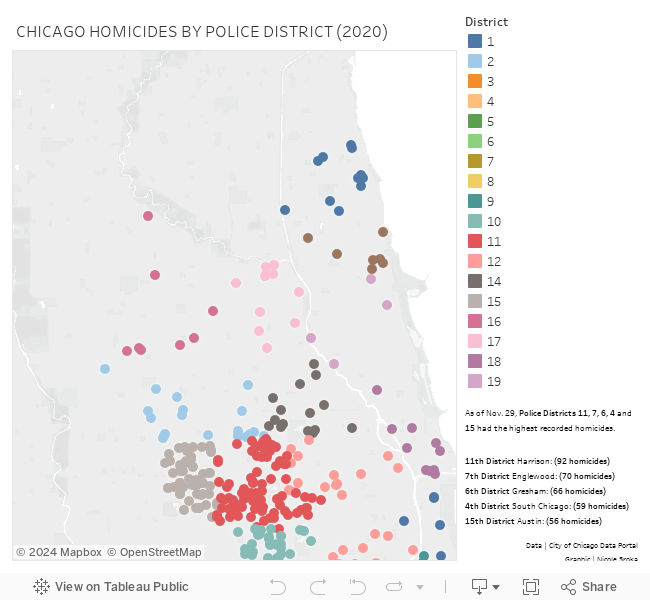
Homicide rates continue to rise in Chicago amid the ongoing COVID-19 pandemic, surpassing last year’s recorded number of homicides by 207 with roughly a month left until the new year.

As of Nov. 29, Chicago has had 711 reported homicides, with most concentrated on the city’s West and South sides. 

Chicago had seen a steady decline in reported homicides from 2010 to 2015, averaging about 542 per year. The city had 788 in 2016, the highest recorded since 1992, when there were 942 homicides. The city’s homicide rate decreased after 2016 with annual totals falling below 700 until this year. 

An analysis of data from the City of Chicago Data Portal and the US Census, Chicago’s 2019 homicide rate per 100,000 people was roughly 18.7%, a 3.4% decrease from 2018 and a 6.1% decrease from 2017. Based on population and homicide data from 2017 and 2019, it appeared that the overall homicide rate for the city was decreasing, though, more current data prove otherwise.

Neighborhoods on the Northwest Side, such as Belmont Cragin, have seen a 25% increase in the number of homicides compared to the total number of homicides in the community area in 2019.


Jenniffer Navarro, a 21-year-old nursing student, has lived on the Northwest Side all of her life. She lives in the Belmont Cragin neighborhood.

Recalling her childhood, Navarro mentioned that levels of violence in the area have dramatically increased particularly due to gun-related crimes. 

“You know it’s a bad thing [gun violence] but you kind of feel hopeless, because you don’t know what to do about it because, like, what can you do about it? It’s like nobody else is taking the stance” Navarro said.

It was not until her teenage years that she became aware that levels of violence were increasing in her community, citing a 2015 incident where one of her classmates was shot and killed outside of his home.

“I saw him right before he got killed,” she said. “That’s when I realized how bad it was getting over here [Belmont Cragin].”

Toward the end of 2019, Navarro lost one of her close friends — a victim of a drive-by shooting in Belmont Central near Hanson Park.

The victim was in his car roughly a block away from his home where he was shot multiple times, eventually crashing into three cars before he was taken to the hospital. 

Navarro said that despite the plea of the victim’s family to have a detailed police investigation, the offender still has not been found.

Referencing practices of policing, Navarro stressed the importance of clearing homicides in order for justice to be served to the victim and their family.

“I think the stigma of ‘just another homicide’ should be erased,” she said. “I am sure that there is a sense of desensitization that police undergo because they are so used to dealing with homicides all over Chicago.”

Dr. Charles Wellford, chair and professor of Criminology and Criminal Justice at the University of Maryland, College Park, and James Cronin, a research associate at the university, said that “clearance rates”, in criminal terminology,  refer to the proportion of crimes in a jurisdiction at which police report an arrest.

In a report published by the Chicago Police Department, Chicago had one of the lowest homicide clearance rates in the nation compared to other populous cities in 2017.

Of the cities mentioned –– New York, Los Angeles and Chicago –– New York had the highest homicide clearance rate in 2017 with 85% of homicides cleared, followed by Los Angeles with 73% and Chicago with 36%.

The Chicago Sun-Times reported that CPD’s homicide clearance rate was 53% in 2019, a significant increase from 2017.

Dr. William McCarty, an associate professor of Criminology, Law and Justice at the University of Illinois at Chicago, said that clearance rates are considered to be a successful homicide investigation metric where the individual police department has compiled enough evidence to find an individual for prosecution. 

A factor that coincides with the low clearance rate in the city, as hypothesized by McCarty, lies with tension among police officers and community members.

“I am highly, highly confident that when you have these disruptions in police community relations, there’s a theory of procedural justice, which basically advocates that when people feel that police have less legitimacy, they’re more likely to not call or not engage with the police” he said.

Distrust in police can be linked to poor experiences individuals have had with community policing.

Moe Ahmad, a 21-year-old law intern and student of criminology, grew up exposed to violence within his communities, altering his time between the Austin and Belmont Cragin neighborhoods.

Waking up at 3 a.m. to the sounds of gunshots, sirens and people shouting is not foreign to Ahmad, as he mentioned feeling desensitized whenever confronted with noises related to gun violence.

Within the last four years Ahmad lost five people he knew to gun violence. This past summer he lost one of his best friends to gun-induced wounds.

Recalling the moment where his friend was shot in an alley outside his home, Ahmad noted he saw an officer in a patrol car roughly five minutes before the rounds went off, though, when the shooting occurred it took a while before officers came on the scene.

“He [the police officer] was patrolling five minutes before that, five minutes before the shooting” he said. “How far can you get in five minutes? You’re telling me that you didn’t hear those gunshots?”

Similar to Navarro, Ahmad mentioned that the police have never found the offender.

Strained relations between community members and the police can result in lower homicide clearance rates, as witnesses and people who have information regarding homicides can be less likely to offer their testimony.


Dashboard: Illinois firearm recovery data


McCarty said that the proliferation of guns makes it more difficult to solve homicide cases, as guns can separate individuals by a distance compared to weapons like knives which can produce more evidence.

“I would argue that a lot of it [low clearance rates] is more of the distrust between police and community that leads those investigations to be more difficult” he said. “The proliferation of guns, I would say, makes those cases harder to investigate.”

Data from the U.S. Department of Justice –– the Bureau of Alcohol, Tobacco, Firearms and Explosives –– showed that in 2017, some of the main source states for Illinois firearms are border states: Indiana, Wisconsin, Missouri and Kentucky.

The report listed Chicago as the top firearm recovery city in Illinois, followed by Rockford, with pistols being the most frequently recovered firearm. 

In April, former Chicago Police Superintendent Charlie Beck stressed that the city has fallen victim to two pandemics: COVID-19 and gun violence.

“There are two pandemics in Chicago, and only one is virus induced,” Beck said during an April 8 press conference with Mayor Lori Lightfoot.

The unforeseen pandemic can potentially be linked to the increase in overall reported homicides. Since March, individuals have been confined to their homes due to the implementation of stay-at-home orders as well as the elimination of indoor and outdoor dining.

It is likely that the homicide rate can be related to domestic abuse situations and conflicts that result between individuals who have had disputes within a singular, shared space.

“I think that spike in violence, that corresponded with the pandemic, due to more interpersonal tensions, you know, between intimate partners, right? There’s intimate partner murders and homicides, too.” McCarty said.

Experts say that to effectively combat the issue of gun violence related homicides, it is essential to investigate the larger issues of the lack of justice served the families of homicide victims due to low, overall levels of clearance and gun legislation.

McCarty stressed the reality of gun control legislation in neighboring states which contributes to gun related homicides and ongoing violence within the city, as well as measures individuals are taking to trace the spread of weapons across state lines.

“A lot of criminal intelligence analysts use it to try to understand how people are connected in these groups and organizations and the likely people who either can be the next victim or the next shooter,” McCarty said.

This process, coined a social network analysis, refers to individuals analyzing and tracing the spread of weapons based on who individuals associate themselves with.

“Talking about the flow of guns into the city, which is a big problem, an issue that comes from states that have more lax laws,” he said “There’s a real pipeline of weapons that just flow into the city.” 


Reporter’s Notebook

Why is Chicago’s Lakefront Washing Away?

By Myra Leon, Jose Vidales and Itzel Elizarraraz • December 14th, 2020

As water levels continue to increase over the past seven years, some areas along the lakefront are eroding away, causing fear with vanishing beaches and issues with residents and their homes. 

Lakefront owners are worried about increased water levels as it is starting to affect property. Areas like Rogers Park, Andersonville, and South Shore have been some of the most-impacted areas. The current reading for water levels in Lake Michigan is on average 581.54 feet for this year.

As for last year, the average was a bit higher with a reading of 581.64 feet. Although water levels dropped they are still well above the long term average line that sits at 578.9 feet.  

Max Berkelhammer, an environmental professor at the University of Illinois at Chicago, said rising precipitation levels is the primary cause of the rising lake levels at Lake Michigan.

“The causes are relatively simple,” Berkelhammer said. “If you think of Lake Michigan as a giant bathtub, there is water coming in from streamflow, groundwater, and rain. Then, you have water coming out from evaporation and also some rivers that run out of the lake.

“So, when you have rainfall increasing like we have had and increasing rainfall is happening faster than losses of water, then you basically start to accumulate water and it just keeps rising.”

Residents’ Homes Impacted

According to the National Weather Service, lake levels rose 6 feet from January 2013 through November 2019, including nearly 2 feet from January to July 2019. 

The damage from storms and crashing waves have raised a lot of concerns amongst residents who live on or near the lakefront. 

“There’s a park close to where I live, Berger Park,” said Jennifer Misiurewicz, who has lived in a building on the beach for the past two and half years near Berger Park. “There was a storm last year that completely washed away the whole walking path.”  

“It got hit with a bomb, you know like a tidal wave,” she said. “The entire path was washed away and there were less rocks keeping the lake from the park area.” 

Misiurewicz is one of the few lucky residents who haven’t experienced any tremendous flooding or damage to her building caused by the massive waves during storms. Other residents haven’t been so lucky. 

“Down at the base of our building because there’s no sand,” said Mindy McGuffee who lives in a high-rise building on the lake near Berger Park. “There’s no rocks, it’s just the lake and then these steel barriers, and then concrete of our fishing dock and parking garage. So, when the huge waves are really slamming, I have felt the building shake.”

“I think it was last October that was the worst. The waves beat up our submarine door, so water got in our garage, our garage flooded, there was like a foot of water in it. Every time it got wavy after that, because our door was messed up, it would happen all over again. That has been sorted out, thankfully.”

Many other residents have struggled with funding for repairs and have called the city for action.

Leslie Perkins, chief of staff for Ald. Maria Hadden (49th Ward) that covers Rogers Park and parts of West Ridge, said the office is in “close communication” with the Department of Transportation, Chicago’s Park District and Congresswoman Jan Schakowsky about securing additional federal money to come up with a comprehensive plan for Chicago’s entire shoreline. 

According to Chicago Real Estate, in February, Gov. J.B. Pritzker issued a state disaster proclamation, joining Mayor Lori Lightfoot in seeking federal relief to address $37 million in damage to the Cook County shoreline. 

The additional federal money requested could reflect the total amount in damage to the shoreline. 

“The lake is really unique because it has multiple jurisdictions, so it does have to be kind of this overly bureaucratic process,” Perkins said. 

Although the city is making progress in securing funds to restore and protect the shoreline, the funds will only go towards public property. 

“Unfortunately, even if we get the federal money, it will only go toward public property,” Perkins said. “Private property owners are still responsible for any sort of engineering projects that they want to install.”

Juliet Dervin, who is one of the three founding members of the South Side Lakefront Erosion Task Force and creator of South Side Lakefront Facebook page, lives in South Shore in a co-op building on the lakefront. She mentions that about a year ago, they started suffering terrible damage to their property. 

“As a private property, we are responsible for whatever is needed to protect it,” Dervin said. “It’s turning out to be quite a significant sum.”

Dervin’s efforts, along with other residents of South Shore, to secure funding have been inspiring.

According to the Block Club Chicago news site, South Shore residents took state officials on a tour of the neighborhood’s lakefront as they try to secure funding to protect private homes from worsening erosion. 

“We are waiting to hear whether we will be considered for a federal grant through the Federal Emergency Management Agency,” Dervin said. “They have money set aside for pre-disaster mitigation.”

This decision could possibly take longer than expected under the current circumstances, but Dervin and the rest of South Shore still hold onto hope. 

Temporary Solutions

Recently, residents near the lakefront have been placing large rocks along the shoreline in hopes of reducing flooding risks.

“The issue is not stopping the lake from rising but preparing for the lake to rise,” Berkelhammer said. “For example, thinking about infrastructure on the shoreline that can reduce flooding risks. In addition, some infrastructure can be damaged on the shore which will require moving things away from the shoreline to save them.”

Berkelhammer warned that if no action is taken by the city to address this issue, they run the risk of Lake Michigan damaging the infrastructure along the shoreline and the closure of some of the beaches. 

For example, high water levels at Lake Michigan pose a serious threat to visitors looking to swim at the many beaches along the lake. Especially to young children or inexperienced swimmers who can drown.

Lake Levels Now

Water levels in Lake Michigan as of the month of November have been declining. It is normal to see the water level decline during this time of year due to low precipitation. 

According to the US Army Corps of Engineers, water levels in Lake Michigan compared to last year, only in the month of November, is 2 to 4 inches lower. Looking at water levels from 1918 to 2020 Lake Michigan is above average. 

With the same data provided by the US Army Corps of Engineers, this year’s water level average is 581.39 feet. As for the long-term average, the annual line rests at 578.71 feet. Lake Michigan is about 2 inches above long-term average. To see the long-term water levels in Lake Michigan view this graphic, which shows Lake Michigan and Lake Huron share the same water level. 

Taking Action 

As both the North and South sides are waiting to hear back from pending funding opportunities, residents near or on the lakefront can connect with their Alderman for temporary assistance or stay connected with other like-minded members of the community through neighborhood Facebook pages. 

Dervin’s Facebook page, South Side Lakefront, provides extensive information on the issue in efforts to raise awareness on how to help the South Side’s lakefront. 

Dervin said her page’s goals are to “help people be aware, connect and act.”

“We just need to do our best,” Dervin said. “Make our best effort in getting the right information to our leaders, so they can make the right decision.”

Chicago’s Love Fridge is Tackling Food Insecurity During Pandemic

By Jenny Aleman and Monserrat Dominguez • December 14th, 2020

love fridge photo


The Love Fridge outside Marz Community Brewing after getting its new shelter for the winter. (Photo/Love Fridge)

Little Village, Logan Square, Humboldt Park and Back of the Yards residents pass by “love fridges” on the streets each day.

The Love Fridge Chicago community organization is a collective that practices mutual aid grounded in food. Residents are allowed to take what they need from the community refrigerators and are also encouraged to leave what they can. 

Mutual aid as opposed to things like charity or non-profit refers to the community coming together to help one another while acknowledging that the society they live in was not built to meet those needs for them.  Like most mutual aid movements, the Love Fridge Chicago centers on practicing correlative and collective care for one another. Therefore, the Love Fridge is solely funded by donations. 

Because the Love Fridge collective emphasizes the concept of mutual aid, Eric Von Haynes of the Flatland Press and a co-founder of the Love Fridgesaid, “A big hurdle is always making sure you’re not doing charity. Not dictating what people need.”

Love Fridge During a Pandemic

For the people from the Love Fridge Chicago, Chicago communities seemed to be dealing with food insecurity at an all-time high rate.  According to Feeding America, more than 54 million people may have suffered food insecurity this year because of the COVID-19 pandemic. 

Due to the economic downturn of coronavirus, many individuals in Chicago neighborhoods have suffered from a lack of access to food.

The main communities disproportionately impacted by the pandemic have mostly been in Black and Latino neighborhoods which is where most of the communal fridges have currently been placed. There are 18 total fridges around Chicago alone.  

This is why they focus a lot of their efforts on the South and West sides, said Ash Godfrey, one of the core organizers. The first-ever Love Fridge was actually set up in Little Village in July 2020, where today, its residents are: 84% Latino, 77% Mexican/Mexican American, 12% African American and 39% foreign-born. 

“Little Village has been the most amazing and supportive community …  we really wouldn’t be where we are without their support,” Godfrey said.. 

It’s no secret the COVID-19 pandemic has been one of the main reasons why these communal fridges have been needed to begin with. However, it has also been holding the Love Fridge collective back from acting on other communal efforts they have decided they want to do. 

“If COVID wasn’t around, I think our team would be more on the ground,” Godfrey said. “Doing more within the communities, specifically in like Black and Brown communities.”

How It Works

The communal fridges are made possible thanks to The Love Fridge volunteers, along with the residents of the community where the love fridge was placed. The way it all comes together depends on what Eric Von Haynes, the co-founder of The Love Fridge, refers to as the three tiers of the program. 

The first tier refers to the residents who volunteer a piece of their land so that the fridges can be placed there. These residents also supply the power and are overall recognized as “hosts.”

Hosts are essential when it comes to helping this movement stay legal. Because the fridges are placed in private property, no permit from the city is needed which makes it possible to set many more of them.

Although everyone from the residents to businesses are encouraged to donate food, all of the fridges themselves have been solely donations by the community. After receiving the fridges, The Love Fridge collective building team build the shelter around the fridge so that it is protected from things like the sun.

The second tier refers to “dirt farms, star farms … where they supply food or make gardens for their community. And now they have a fridge to do surplus and has a dry pantry,” Haynes said.

Residents are allowed to take what they need from what is in these fridges, as well as encouraged to leave what they can. This motivates not only residents to drop off food but also nearby businesses with food surplus. Thanks to the Love Fridges, these neighborhoods are able to deal with issues like food waste along with food insecurity.

Despite wanting to accept all that they can, The Love Fridge does provide “food guidelines” that food donors are expected to follow. These guidelines include acceptable and unacceptable food donations and fridge etiquette.

The guidelines also include the COVID-19 precautions such as wearing a mask, wearing gloves when taking/dropping off food, and ensuring that peoples’ hands are clean and sanitized. One can find these guidelines posted on the fridge itself or beforehand on the Love Fridge website. Despite these guidelines, the Love Fridge collective tries to be as accessible to the community as possible. 

“There’s no discrimination between who eats, it’s free food for all people,” said Ramon “Radius” Norwood, the founder of The Love Fridge. 

The third and final tier would be retail locations such as popular Chicago restaurants. “We got Honey Butter, Dill Pickle … these venues for multiple reasons have partnered with us to serve food within their footprint,” Haynes said.

Despite this, making the Love Fridge movement function is not an easy three-step plan. There are things the organizers worry about from time to time that residents might not even think about.

 “We don’t have permits. There are no laws saying we can’t do it but there are definitely no laws necessarily protecting us. We just have the support of the communities.” Godfrey said.

The Love Fridge is a community effort as much as it is for the community. It is not to be thought of as only for those in “need” but for everyone. 

The Aftermath

When it comes to the communities’ responses to the Love Fridges, there have been some shocking responses by a few residents. However, Godfrey mentioned they mainly come from the older generation. 

“I think the people who are the most shocked by this are older people,” she said. “Especially people within the communities kind of seeing like ‘oh people care’ and people are willing to put their ass on the line to help other people.”

Unlike other community projects, they have had a lack of vandalism and even a lack of neighborhood complaints. Because of these optimistic responses and engagement, the communal fridges have been able to move forward and help many other neighborhoods during the pandemic. 

“People seeing these fridges is eye-opening and the fact that I don’t think a lot of people realize. That people still struggle to eat and feed themselves. [The Love Fridges are] a reminder that that’s a reality,” Godfrey said. 

Having fridges with free food allows each community to become familiar with the mutual aid concept and hopefully carry it with them everywhere they go. What better way to do that than through food? Just like Norwood and Von Haynes said:

“Food is love.” 

Election 2020: Young Voters Turn Out in Historic Numbers

By Kate Perschke • December 13th, 2020

The 2020 election may prove to have a historic turnout of young voters, with the conservative end of calculations showing 52% of eligible voters ages 18 to 29 years-old cast ballots, an eight-point increase from 2016, an analysis of election data shows.

This number rivals the 2008 presidential election, which set the record of highest young voter turnout since 1984, at 48% of 18-29 year olds. According to election data, young voters are estimated to have made up 17% of the electorate, at over 27 million votes in a year Barack Obama campaigned to young voters on a message of change.

In some counties nationwide, the 18-29 vote may have secured victory for President-elect Joe Biden; however, this does not necessarily correlate to young people’s approval. In a poll conducted by the Institute of Politics at Harvard University, only 30% of young Biden supporters were enthusiastic about voting for their candidate. A study in June found that Democratic voters ages 18-29 favored Sen. Bernie Sanders at 31% and Biden at 20%.

“I felt like I had no other choice than to vote for Biden,” said Sara Sifferman, a recent  graduate of the University of Illinois at Chicago. “I just felt like putting another old white man in office wasn’t the best solution.”

According to the Center for Information and Research on Civic Learning & Engagement (CIRCLE), the national vote of 18-29 year-olds went to Biden with 61%, and 36% to President Donald Trump. Illinois saw similar numbers, with young people favoring Biden’s 61% to Trump’s 34%.

Illinois election officials reported the state set records, with early numbers of nearly 3.6 million votes cast and 1.76 million ballots mailed to election authorities. Additionally, this election saw a record number of voters register to vote – more than 8.3 million residents. As of Nov. 30, 5.9 million votes were cast, meaning 71% of registered voters participated in the election. 

For Cook County voters, the presidential election was not the only important thing on the ballot. Among other questions, the amendment to the Illinois State Constitution implementing a graduated income tax and the retention election of Judge Michael Toomin were two of the most contested. The #TossToomin and #FairTaxNow campaigns gained lots of traction with young voters in Cook County, despite the failed outcomes. 

Chicago Votes engaged young people digitally amid COVID-19 outbreak for a record breaking young voter turnout

Chicago Votes, a nonprofit civic engagement organization led by young people, has been working to reach those young voters. Alex Boutros, organizing manager for Chicago Votes, offered insight as to why so many young people were engaged in this election, saying the coronavirus outbreak demonstrated “all of the injustices and atrocities and inability for this country to support its community members.”

“I think people – especially every person who might not have voted because they were a waitress, because they were working all those people who lost their jobs and weren’t supported now have plenty of time to think about voting,” Boutros said. 

Chicago Votes was in the middle of Parade to the Polls, an initiative where the group takes eligible young voters to register and vote at the polls, when the coronavirus pandemic shut everything down.

“We planned a huge parade, like a huge citywide parade, [everybody] was going to be part of it,” Boutros said, “we were going to have high schools leading it, colleges, drag queens, bikers – anyone that wanted a section in the parade – and that just super didn’t happen. Because you can’t parade during a pandemic, unfortunately.”

Still, Boutros and Chicago Votes continued organizing and educating young people about voting through the digital sphere. The organization took advantage of social media, turning lectures and drinks at the bar into live streams and virtual happy hours. 

Chicago Votes advocated for the jail to be a polling place, and were successful despite the growing concerns about COVID-19. Groups of members were still able to visit the jail to register voters but in a socially-distanced way that was much smaller than previous years.

Parade to the Polls, one of Boutros’ favorite Chicago Votes events, became remote: “Our high school and college engagement just had to look different. We were on student calls in classrooms, […] we created get out the vote activities, like how to engage your community and how to build your ballot.”

The work of Chicago Votes is not stopping now that the election is over. From court watching programs to holding elected officials accountable, Chicago Votes plans to keep young people engaged in civic engagement beyond the polls. 

“Our county government [doesn’t] know how to engage young people,” Boutros said. “We will create a graphic that is much more engaging than the water reclamation commissioners will themselves.”

Public education is at the center of the organization’s next initiatives. Engaging voters in municipal elections and popularizing participation in them among young people is one of Boutros’ goals. In 2019, Chicago Votes hosted a mayoral forum for Chicago Public School high schoolers followed by a Parade to the Polls. Boutros said she hopes that this will become a precedent.

 “Every four years we throw a huge forum where we make it a staple and a norm that if you’re running to be mayor of the city, that you must be directly accountable to Chicago Public School students,” she said.

Early unofficial counts on Election Day showed that Chicago’s young people led in the most ballots cast. Despite not turning out in as large of numbers as their older counterparts, young Chicagoans set records in the city.

Millennials, Gen Z turned out to be more engaged in social issues as seen in their turnout to vote

As of July 2019, 50.7% of the nation’s population is made up of Millennials, Gen Z and younger generations, according to 2019 Census Bureau data. Of the total votes cast in the election, 17% came from young people, according to CIRCLE.

According to the Pew Research Center, Gen Z is the most racially and ethnically diverse generation. From a survey conducted in 2018, Millennials and Gen Z were found to be more progressive and pro-government than their older counterparts.

While Millennials and Gen Z have distinct differences, their politics seem to align in the 2020 election; 63% of young voters cited the coronavirus as a top issue on the ballot, with 29% citing racism and 15% citing climate change as other important issues. 

“The next four years, I hope that Biden brings America back together and erases […] the division Trump caused,” Sifferman said.

Social media engaged young people more than any campaign or government effort 

After the 2016 election, coverage of political social media has revolved around negative aspects including fake news, Russian bots, and the president’s tweets. This year, social media played an important part in engaging and mobilizing young voters due to the coronavirus and virtual campaigning. 

According to a study conducted by CIRCLE, social media was a bigger source of election information for young people in 2020 than it was in 2018. Approximately 64% of young people ages 18 to 29 say they are more informed about politics because of social media.

Settle for Biden is an online grassroots group of former Elizabeth Warren and Bernie Sanders supporters whose mission was to persuade other progressives and leftists to vote for Biden opposed to voting Green or not at all. With over 288,000 followers on Instagram, Settle for Biden used their platform to inform voters about registration, provided voter guides, and shared election results. 

The account was created on April 10, after Sanders had stopped campaigning for the presidency. The account began as comedic relief, posting about the slight improvements of competency Biden had. Following the resurgence of Black Lives Matter protests across the country, the account buckled down on more informative posts to persuade followers to settle and vote for Biden.


Reporter’s Notebook: Interview with Kate Perschke about reporting this story


While the account fostered debate among the left about Biden’s capability, Settle for Biden attracted a large following of users who sought to perform online activism. Memes like voting orange out of the popular game Among Us and performative posts in support of marginalized groups garnered more likes and attention than posts about voter registration and phone banking opportunities

Post-election, the Settle for Biden accounts have transitioned to a mission to hold the administration accountable, including reporting on cabinet picks and pushing for more progressive solutions. 

Another social media site that cultivated election discourse was TikTok. The short-format video app has been the foundation for the rise of influencer groups who create mega-accounts, or “TikTok houses” that create niche content for their audiences. 

Emerging in October, TikTok for Biden, now known as Gen Z for Change, is reminiscent of a TikTok house, host to over 400 creators with a collective 200 million following. The coalition posts about registering to vote, Biden’s policies, and promoted events such as phone banking and registering to vote efforts.With the election results certified, TikTok for Biden has transitioned to Gen Z For Change, which will continue to produce videos that raise awareness and push for change. However, similar to Settle for Biden, TikTok for Biden seemed to get less views and likes with opportunities for action and more engagement when popular creators published more light-hearted content.

Despite the lack of a relationship between online activism and IRL action, accounts like Settle for Biden and Gen Z For Change have informed younger voters about the current politics of the United States. Whether the coronavirus pandemic, lack of campaign outreach, or overall unenthusiasm for the candidates on the ballot deterred more young people from civic engagement, young people showed up in historic numbers.

Return to The Red Line Project

Saturday Night Football During COVID-19: Less Beer, More Masks

By Chris Katsaros and Charles Tharpe • December 12th, 2020

For the first time since 1906, the Wisconsin Badgers and Minnesota Golden Gophers football teams will not play each other. Minnesota canceled the Nov. 28 game after a COVID-19 outbreak on its team.

Brendan O’Brien, a reporter for the Minnesota Daily, the school newspaper, said the rivalry is “nice for a lot of students [and] faculty, for both schools really, to really go and make a weekend out of it.”

“It’s definitely going to be weird Saturday with Thanksgiving weekend and not having the game, but that has just been this year in general.”

O’Brien said, “I think what everyone is pointing at is that bringing the season back in late October like [the Big Ten] did and having the Big Ten Championship Game coming up in about 3-4 weeks now–they really don’t have any margin for error once you lose a few games.”

“It’s not a great situation for a team like Wisconsin because it pretty much effectively ended their chances, but at the same time I think there is something to be said about still wanting to try to keep some level of safety among student athletes and I think if there is any year to be a little bit more understanding about not being able to play in a Big Ten championship game I think it’s this year.”

Ohio State canceled its Nov. 28 game against the University of Illinois after head coach Ryan Day and several players tested positive for the virus. Two weeks later, the historic Oho State-Michigan rivalry was sent to the sidelines by the pandemic.


Dashboard: COVID-19 tests and cases at Big Ten schools


Most recently, the Dec. 5 game between Northwestern and Minnesota was canceled as the Golden Gophers continue to experience an outbreak on their team.

The New York Times has provided a tracker to search for the number of confirmed COVID-19 cases at over 700 universities. This data was last updated Nov. 19, however it is updated periodically.

As of Nov. 19, the total number of cases for the other Power Five conferences is as follows: SEC with 33,702 confirmed cases, Big-12 with 15,804 confirmed cases, ACC (including Notre Dame for this season) with 20,362 confirmed cases, and Pac-12 with 14,057 confirmed cases.

It is important to note that the total data provided for the other four major conferences is over a week older than the data for the Big Ten. It is also worth mentioning that cases of COVID-19 are spiking in almost every state, so reported cases may change at a non-linear rate.

However, it is still clear that the Big Ten and SEC have far more confirmed cases than the SEC, ACC, and Pac-12. This can be due to state restrictions being more strict based on region, or universities deciding on whether classes will be fully online, partially online, or in person. 

Though these numbers provide context to the size of the COVID-19 outbreaks at universities, it does not necessarily correlate to the football teams. While Wisconsin and Ohio State both reported several thousand cases on their campuses, Minnesota and Maryland (schools that have also reported outbreaks on their football teams, and in Minnesota’s case the largest confirmed outbreak yet) have less than 1,000 confirmed cases. 

According to University of Illinois at Chicago’s Associate Director Fellowship in Sports Medicine, Dr. Terry L. Nicola, college athletes are not being exposed to COVID from teammates, they are being exposed off the field. 

“It’s not because they’re catching [COVID-19] on the field. It’s coming from the outside. They’re [college athletes] not living in a bubble,” Nicola said. “It’s very possible to not catch this disease. It’s extremely possible, not even difficult to defeat this disease, but we’ve made it to this mess.” 

However, the largest number of COVID-19 cases per capita on a Big Ten campus belongs to Penn State University, which has 105.54 cases per 1,000 students. Ohio State, the university with the most confirmed cases, ranks fourth in cases per capita, with 94.53 cases per 1,000 students.

Northwestern University has the lowest number of confirmed COVID-19 cases, with 491 as of Dec. 13. Northwestern ranks tenth in cases per capita, with 22.37 cases per 1,000 students.

Of the four Big Ten universities with the lowest cases per capita–Northwestern, Maryland, Minnesota, and Rutgers–Northwestern has the smallest enrollment, with only 21,946 students. This is compared to 40,743 students at Maryland, 51,327 students at Minnesota, and 50,173 at Rutgers.

In total, the Big Ten had 41,422 confirmed COVID-19 cases as of Dec. 13, an average of 68.13 cases per 1,000 students.


The Medical Effects of Playing Football in a Pandemic

The medical task force of the Big Ten’s goal is “to be able to be data driven; to be able to access appropriately,” Dr. James Borchers, Ohio State’s football head physician, said in a Oct. 23 press conference, “to be able to provide repetitive surveillance through testing, and ultimately to provide the health and safety guidance that is needed to help these student athletes return to competition.” 

The Big Ten required all student athletes, coaches, trainers and other individuals to undergo daily antigen testing. Players that test positive for COVID risk the injury of cardiac registry.

Nicola said that the biggest concern for athletes who contract COVID-19 is the lasting effects it can have on your heart. 

“There’s something that’s really dark or ominous that is not discussed–the myocarditis,” he said. “This virus, unlike the flu, really hits the vasculature.  It’s not about inhaling this and your lungs become inflamed–it actually gets through the vessels” 

In addition to being an Associate Director in Fellowship in Sports Medicine, Nicola is also an Associate Professor of Clinical Rehabilitation Medicine at University of Illinois College of Medicine. He said he believes that the recovery process for college athletes that contract COVID-19 will be difficult. 

“The biggest concern for athletes [who test positive for COVID-19] is if you do an MRI of the heart and you see scars, if you’re a division one college athlete, division three even–you’re not an athlete anymore after you get this disease, like you were [prior to contracting COVID-19],” he said.

“With an athlete, it has an immediate effect because we use every last bit of your heart function.” Nicola said, “I was a marathon runner. I can guarantee that if I was at the top of my game, and then got COVID, I can say with my gut (without any academic research)…I would be shocked if I could ever reach my marathon time again after getting COVID.”

Nicola said he thinks that with 100,000 new cases each day in the United States, the chances of being exposed to COVID-19 are very likely. These recent numbers are why he thinks that regulating the social lives of collegiate athletes is necessary. 

“The students should live in a quarantine situation for the season,” he said. “They have not.  If they were all taking the saliva test and kept testing negative, that will keep them from getting infected. They are not regulating their social lives for this season.”

As the winter season approaches, indoor sports such as basketball plan on returning with new COVID guidelines to follow. Nicola said he thinks that basketball players should take more protective measures as basketball is indoors, which heightens their chances of getting COVID-19. 

Nicola, like many other medical professionals, is stressing the importance of wearing masks and social distancing to calm the “forest fire”, an analogy to which he compared this pandemic. 

“Here’s what we know–we know that masks work, that if two sides are wearing them and if you go by the rules for long enough,” he said,  “what’s really sad is that within one and two months, we could’ve had this infection under lockdown.” 

How Did We Get Here?

On Aug. 11, the Big Ten voted to postpone fall athletics due to the COVID-19 pandemic. Commissioner Kevin Warren mentioned that the conference was prioritizing the “mental and physical health and welfare of our student-athletes” in their official statement.

In making its decision, which was based on multiple factors, the Big Ten Conference relied on the medical advice and counsel of the Big Ten Task Force for Emerging Infectious Diseases and the Big Ten Sports Medicine Committee.”

The decision to postpone the college football season was met with both criticism and understanding among the various universities in the conference. However, just over a month later on Sept. 16 the Big Ten released a new statement noting their intention to resume the football season on the weekend of Oct. 23-24.

The COP/C voted unanimously to resume the football season starting the weekend of October 23-24, 2020. The decision was based on information presented by the Big Ten Return to Competition Task Force, a working group that was established by the COP/C and Commissioner Kevin Warren to ensure a collaborative and transparent process.”

Since this press conference, Big Ten football teams have had over 60 positive COVID-19 cases, and there has been at least one game canceled every week since the second week of the season. 

This stretch of outbreaks began with Wisconsin in October with 27 positive cases. Maryland followed with 8 positive cases, and this week Minnesota has been forced to cancel games for the next three weeks as they reported 40 COVID cases. 

Warren said that student athletes and viewers needed to “adapt” and “show flexibility” in reference to the start of the 2020-21 football season. 


Reporter’s Notebook

Return to The Red Line Project

Election 2020: Biden, Trump Fundraising Down the Stretch

By Kate Perschke • October 24th, 2020

With the presidential election 10 days away, the Biden and Trump campaigns are in the final stages of fundraising and spending. 

Vice President Joe Biden and the Democratic National Committee have raised $1.51 billion to President Donald Trump and the Republican National Committee’s $1.57 billion, according to committee filings with the Federal Election Commission.

A recent poll from the Pew Research Center suggests that at least 63% of Biden supporters view their vote as a vote against Trump rather than a vote for Biden. In contrast, only 29% of Trump supporters view their vote as a vote against Biden. The latest national polls position Biden 10 points ahead of Trump, a lead that is mirrored in the current campaign financial reports.

This election is the most expensive yet, data show. The Center for Responsive Politics reported  that the 2020 election will near $11 billion, 50 percent higher than the cost of the 2016 election. Spending is expected to nearly double from normal election cycles, rounding to $5.2 billion.

Sheila Krumholtz, executive director of the CRP said in an Oct. 1 statement, “This is already the most expensive presidential election in history and there are still months of election spending to account for. The unanswered question is whether this will be the new normal for future elections.”

Small-dollar donors are showing up in historic numbers this election

Small-dollar donors, individuals who contribute $200 or less to a campaign, have made up 22% of all contributions in the 2020 election, a figure that has increased from 14% in the 2016 election, according to the Center for Responsive Politics.

Small-dollar donors have become increasingly important campaign funders in the recent presidential elections, with President Obama’s 2008 primary campaign raising $21.5 million from contributions of $200 or less alone. 

This election year, small-dollar donors have contributed at historic numbers. At the end of August, the Trump and Biden campaigns saw 43% and 42% from small-dollar donors, respectively. 

Through Oct. 14, the Trump and Biden campaigns are seeing 77% and 39% in small donations, respectively. This is drastically different from the 2016 election, where small-dollar donors accounted for 18% to 25% of nominee contributions.

Sen. Bernie Sanders (D-Vermont) revived the importance of small-dollar donors in 2016, and once again in 2020, with tactics such as asking for $27 donations and using taglines like “paid for Bernie (not the billionaires).” Small-dollar donors have become a campaign secret weapon, with the Sanders’s campaign raising $46.9 million from small-dollar donors over the course of the 2020 primary. 

Other Democratic primary candidates saw large portions of their contributions come from small donors; Elizabeth Warren, 57%; Amy Klobuchar, 45%; and Kamala Harris, 40%.

Nicole Mattson, an undergraduate student at the University of Illinois at Chicago, explained why she donated $17 to the Biden-Harris campaign: “I donated to Kamala before the [vice presidential] debate because [the campaign] kept emailing me to donate… probably 10 emails a day. They wanted to reach 300,000 donations before the debate and I wanted to contribute.”

“I wish I could donate more,” Mattson added, citing the importance of defeating Trump and controlling the coronavirus pandemic in the US.

The coronavirus pandemic has significantly changed the presidential election in many facets, but especially in terms of money. The Biden campaign embraced the virtual sphere and was quick to take on a digital outreach strategy, focusing on calls, texts, and email campaigns. 

Darci Outlaw, a healthcare professional in Chicago, donated $110 to the Biden Harris campaign. “This is my first donation to a presidential campaign. I feel this is the most important election of my lifetime. I believe this election is about morality … bringing people together.”

In response to Biden’s digital campaign strategy, Outlaw said, “The one thing that is annoying, everyday I receive a text asking for more money.”

Biden’s digital strategy has been working, with his campaign passing the Trump campaign’s cash advantage at the end of August.

The Trump campaign has stuck to traditional means of voter outreach by continuing to canvas in person. Trump’s first virtual fundraiser was in July, after a three-month hiatus from campaign events. The campaign reported the event raised $20 million by 300,000 individuals.

Super PACS, Big Money

Historically, the largest parts of campaign contributions come from political action committees (PACs). While small-dollar contributions are a significantly large portion of this year’s campaign finances, both Biden and Trump campaigns have money coming from super PACS, billionaires, hedge funds, and large corporations. 

The Biden campaign’s largest super PAC contributor is Sixteen Thirty Fund, which has contributed $18,966,655 to the Biden campaign. The Sixteen Thirty Fund’s mission includes tax fairness, health care, and welfare.

The Trump campaign’s largest super PAC is Las Vegas Sands Corporation, a  resort developer that has raised $37 million. However, the most notable super PAC is America First, which has launched political advertisements in battleground states.

On Oct. 9, America First released a $10 million ad in Pennsylvania criticizing Biden’s plan to raise taxes on businesses. It featured maskless small-business owners in a bar talking about how Biden’s plan would harm their livelihood. 

A Look into Primary Finances

Trump launched his reelection campaign over the summer of 2018, allotting him a one year advantage over Biden and the other Democrat candidates. With the reelection campaign having raised $1.57 billion, Trump and the RNC are raising funds better than his 2016 race, where at this point the campaign had raised around $950 million, setting a Republican fundraising record both cycles.

From August 2019 to March 2020, Trump was raising $130 million to $230 million and spending $75 million to $145 million, significantly more than Biden. In the first seven-month stretch, the Biden campaign was raising $22 million to $88 million and spending $11 million to $75 million, according to FEC data found on ProPublica’s FEC Itemizer.

Up until April when Sanders ended his bid for president, Biden was competing with 20 other Democratic candidates and raising significantly less in some months. From August 2019 to March 2020, Biden was polling along frontrunners Warren and Sanders within a few percentage points.

Fundraising and Spending Speed up as Election Day Approaches

August saw the Biden campaign committee raise $212 million compared to the Trump campaign committee’s $61 million. The Biden campaign broke records with this sum, surpassing the amounts that former Secretary of State Hillary Clinton and President Barack Obama had raised at this point in their respective presidential races.

The campaign saw a surge of contributions following the announcement of running mate, Harris, reporting $48 million in contributions within two days of the vice president pick. 

Choosing Harris as Biden’s running mate was a historic moment in U.S. history, as it is the first time that a woman of color is on a major party ticket. This pick also has been criticized, with Harris’ controversial history as a “top cop” being in stark contrast to the national cry to defund the police in wake of the Black Lives Matter movement.

Both Trump and Biden saw surges in contributions following the Democratic and Republican National Conventions. Trump and the GOP reportedly raised $76 million, and had 21.7 million viewers despite the multiple changes in plans due to the COVID-19 pandemic. The Biden campaign and joint committees announced it had raised $70 million over the four-day convention, and had over 122 million viewers across platforms.

The Next 10 Days are Crucial

The month of September reported the Biden committee raising and spending more than the Trump committee. Biden raised $281.6 million and spent $284.9 million while Trump raised $81.3 million and spent $139.2 million.

Biden’s campaign also claimed the fundraising advantage in the first half of October, raising $130 million to the Trump campaign’s $43 million. The Biden campaign also gained the cash on hand advantage with $162 million, crushing the Trump campaign’s $43 million.

Both campaigns have begun filing F6 forms — 48-hour notices of contributions over one thousand dollars. From Oct. 17 to 22, Trump has reported contributions totaling $9.3 million compared to Biden’s reported $1.9 million.

Following the final presidential debate on Oct. 22, the Trump and Biden campaigns expected to raise significant amounts of money. ActBlue, a democratic super PAC reported raising $4 million during the debate. The Trump campaign reported they raised $26 million on the day of the debate, alongside the RNC.

With 10 days until Election Day, fundraising and spending are expected to increase as the candidates try to secure their win of the presidency.

Read more:


Return to The Red Line Project

Data: Northwest, West Sides Hotbeds for Abandoned Vehicles

By By Giovanni Velez and Joseph Crump • May 8th, 2020

abandoned mercedes photo

This Mercedes is one of thousands of abandoned vehicles on Chicago’s streets. (Photo/Giovanni Velez)

Since Jan. 1, 2011, there have been over 250,000 abandoned vehicle service requests to 311, the non-emergency police number in Chicago. Around 200,000 of those are unique requests. Over 10,000 of those requests were made since the start of 2020. 

According to the Department of Street and Sanitation, a vehicle is classified as abandoned if it meets one or more conditions of the following criteria:

  • On a public way in a state of disrepair as to be incapable of being driven in its present condition.
  • Has not been moved or used for more than seven consecutive days and is apparently deserted.
  • Has been left on the public way without state registration or a temporary state registration placard for two or more days.
  • Is a hazardous dilapidated vehicle left in full view of the general public, whether on public or private property.
  • This does not apply to bicycles.

“There’s a seven-day standard but there’s also a standard if it looks like it’s inoperable or hazard or suffering from neglect, they can deem it abandoned,” said Joseph Schwieterman, Director of the Chadwick Institute for Metropolitan Development at DePaul University.

Ruperto Medina, a Chicago Police officer for 13 years, said the vehicles are primarily found in the South and West Sides of Chicago because of so many empty lots there.

“You have abandoned lots [where] a lot of vehicles are [found], especially on the West Side where there’s actual abandoned lots. A lot of people dump their cars there. I say that there are a lot of abandoned vehicles on the South and West Side just because they are abandoned lots to drop these cars off on,” Medina said.

Data from the City of Chicago Data Portal backs Medina’s estimation, as visualized by this map detailing the 1,000 most recent abandoned vehicle service requests:

Much like the disparity between locations, the same kind of disproportion exists in the color of the abandoned vehicles.

According to that same dataset, white and black vehicles are the most common with 33,471 and 32,867 respectively. Followed by the color gray rounding out the top three with 22,815.

According to Axlta, which publishes the largest annual Global Popularity Report of its kind in the automotive industry, in 2019 the most popular colors in North America were white (29%), black (19%), and gray (17%). So it makes sense that these vehicles are most likely to be seen in an abandoned state. Simply put, there are more of them on the street.

The Perception

Imagine this: you’ve been walking the same way to work every day, and every day you see the same old dilapidated little car sitting on the side of the road or in someone’s yard. 

You might have some questions about the car, its history, or even why it hasn’t been taken care of yet. What happens to those cars? Whose job is it to take them away? Why is it still here? Does this mean I live in a bad neighborhood?

“Abandoned cars create blight in a neighborhood,” Schwieterman said. “Abandoned cars contribute to perceptions that neighborhoods are suffering from disinvestment and also damage the aesthetic qualities of a street.”

According to an old psychology theory called the Broken Windows Theory, seeing disrepair and disorder could incite further disrepair and disorder. It’s similar to the famous saying “violence begets violence.”

William McCarty, the director of the Center of Research in Criminality, Law, and Justice at the University of Illinois at Chicago, said he doesn’t believe this theory holds much merit.

“I don’t really see a strong support these days for like a broken windows theory, because usually those theories are centered in neighborhoods that already had these very deep problems that are more likely to be causing crime, as opposed to just the abandoned vehicles or the broken windows, so to speak,” McCarty said.

In other words, abandoned vehicles in poorer neighborhoods is a symptom of greater systemic inequality, not the root cause. 


The reality of the location of these vehicles is more likely attributed to the history of Chicago’s tendency to racially segregate and divide communities.

“The poor tend to be concentrated in certain parts of the city. And that likely results in some disadvantaged areas having a much bigger problem with abandoned vehicles than more affluent areas,” Schwieterman said. “And our city is also stratified heavily on racial lines, which certainly aggravates frustration about these kinds of issues.”

The History of Towing and Chicago’s View

Before 1989, the city of Chicago had its own tow trucks, part of a city-wide move under Richard Daley to privatize city contract work.

However, this is only a part of the problem that Chicagoans have been having with private towing companies. One of the most notorious examples of aggressive and allegedly illegal towing practices is the “Lincoln Towing Service.

Their legendarily infamous practices awarded them permanent recognition in a popular folk song: the Lincoln Park Pirates.

According to a 1988 article by the Chicago Tribune, pedestrians were sometimes knifed, beaten with tire irons and stomped when they refused to let their vehicles be seized.

I found that interesting to write whenever you introduce the complexity of a private business being involved in sort of a city service, you’ve got different priorities. That private company wants to pick up as many cars as possible, right?,” McCarty said.

However, on the matter of abandoned vehicles, these companies have no say. According to Medina, a police officer is required to fill out a tow slip declaring a vehicle abandoned. 

Additionally, towing companies give some people a second chance. 

“I’ve met a lot of ex-gang members that are working for private tow companies that have city contracts. And while it may cost more, because the city’s actually paying someone, it does give the underdog a second chance of making a living for themselves,” Medina said.

abandoned vehicles graphic